As WTOC reported, Mayor Van Johnson said in spring 2025, "Every single one of us have heard that Savannah is becoming too expensive in which to live," around the time city council approved a zoning change that rewired density rules across four historic neighborhoods. That vote had nothing to do with the number most house hunters see first when they search for homes in Savannah: the median sale price. But it points at something the median never will. The story behind that number emerges most clearly at the neighborhood level.
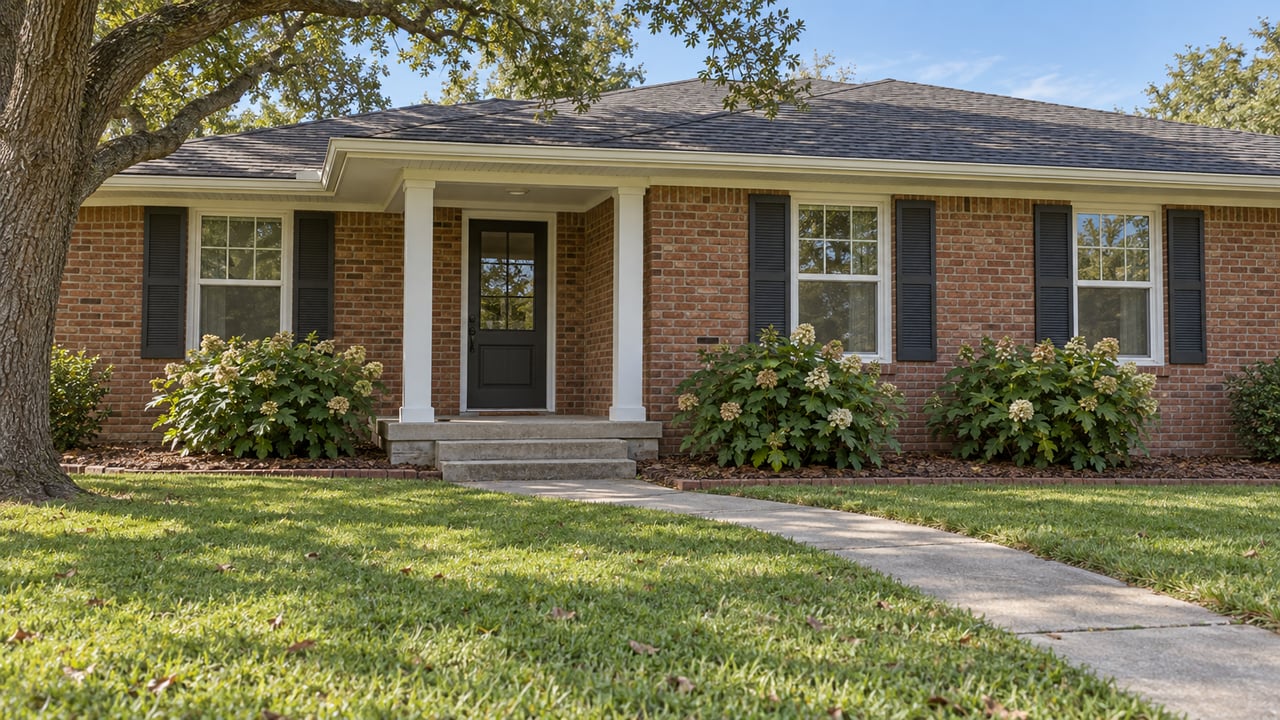
If you have already looked at listings here, you have felt this without naming it. A bungalow near Forsyth Park and a ranch off Ogeechee Road can carry price tags $500,000 apart while sitting inside the same zip code range on a map. The citywide median sale price over the six months ending August 2026 landed around $359,900. But the middle half of every closing that fed into that number spread from $270,000 to $581,900, a band of more than $300,000. That is not statistical noise. It is two pricing systems reporting to the same headline.
The Number That Looks Like a Typo
A $312,000 spread in the middle half of a market's sales is unusual for a city Savannah's size. It happens because the historic core and the outlying neighborhoods are not competing for the same buyer, the same lender criteria, or the same supply constraints. A single citywide headline can obscure the differences between the historic core and the corridor areas discussed here.
Here is roughly how the two sides behave when you separate them:
| Historic Core (Ardsley Park, Thomas Square/Starland, Victorian District, South Historic District, Downtown) | Logistics Corridor (Southside, Westside, Port Wentworth, Georgetown) | |
|---|---|---|
| What sets the price | Architectural scarcity and preservation review | Commute distance to port and industrial job sites |
| Recent price signal | South Historic District median near $1.0 million (March 2026) | Westside median near $232,000 (February 2026) |
| Price per square foot | Roughly $600 in the Historic District, near $327 in Ardsley Park | Roughly $240 citywide corridor comparison |
| Days on market | 163 days in South Historic District, even as prices there fell year over year | 91 days in Westside, with prices also falling year over year |
| What moves it year to year | Zoning changes, since new construction is nearly impossible | Port hiring, mortgage rates, highway and rail buildout |
Together, the two columns show why the citywide median sits in a no-man's-land, underselling the historic core and overselling the broader corridor comparison.
The Historic Core Runs on Scarcity, Not the Market Cycle
Ardsley Park went onto the National Register of Historic Places in 1985 and became a local Conservation District under the Metropolitan Planning Commission in 2018. That designation means demolishing a contributing building requires MPC review, while ordinary interior renovation does not. It is a narrow rule, but it has a wide effect: nobody is adding new lots to Ardsley Park. The supply is fixed at whatever survived the last century.
That fixed supply shows up in how the neighborhood behaves when the rest of the market cools. In March 2026, South Historic District homes sold for a median price near $1.0 million, down 17.6 percent from the year before, yet still took a median of 163 days to close, more than double the citywide pace. A falling price and a slower sale sound like weak demand. Paired with a price still north of seven figures, they describe something narrower: a small, selective pool of buyers who are willing to wait for the right property rather than settle for a comparable one, because in this pocket there often isn't a comparable one.
The price-per-square-foot gap tells the same story from a different angle. Recent underwriting comparisons put the Historic District near $600 per square foot, Ardsley Park around $327, and the citywide figure closer to $240 as of mid-2026. That gap did not open this year. It has been built into the neighborhood since the preservation ordinances went on the books, and it will still be there when the corridor's prices move again.
As The Current reported, Historic Savannah Foundation preservation director Ellie Isaacs said the 2025 zoning change was meant to "allow for the development of much-needed housing options" without abandoning that protection.
The City Just Loosened One Corner of That Scarcity
That quote points to the one real crack in the historic core's supply wall in decades. In the spring of 2025, Savannah's city council approved a roughly 440-acre affordable housing overlay covering Thomas Square, the Metropolitan neighborhood, the section of the Victorian District bordering Forsyth Park, and a 22-acre slice of Live Oak. Building on the city's 2021 Housing Savannah Action Plan, the overlay allows duplexes, triplexes, and small apartment buildings on lots that had only ever permitted single-family homes, as long as the added units meet the city's affordability threshold of no more than 30 percent of a household's gross income.
This does not touch Ardsley Park's Conservation District rules, and it will not make a South Historic District mansion cheaper. But if you are specifically watching Thomas Square, the Starland stretch of it, or the Victorian District, expect small multi-family buildings to start appearing on lots that sat as single-family stock for a century. Over time that kind of supply addition tends to soften a scarcity premium in the exact blocks where it lands, even while Ardsley Park and Downtown keep trading the way they always have. A buyer comparing a Thomas Square listing to one three blocks away in Ardsley Park is no longer comparing two spots on the same curve. One of them just got a small supply valve the other one doesn't have.
The Corridor Runs on the Port, Not on Charm
Southside, Westside, Port Wentworth, and Georgetown price on a completely different input: how close a commute is to the Garden City Terminal and the industrial corridor that runs along I-16 and I-95. Architecture and walkability barely register here. Job access does.
That corridor cooled harder than the historic core did. Westside's median sale price was $232,000 in February 2026, down 7.2 percent from a year earlier, with homes selling in a median of 91 days. A real slowdown, the kind the Historic District hasn't shown even as its own prices have softened. Meanwhile the infrastructure feeding this corridor keeps expanding. A second lay berth at Ocean Terminal was slated to come online in 2026, a change expected to cut the terminal's berth idle time from roughly 12 hours down to about 3, and the Brampton Road Connector, a direct link between Garden City Terminal's gates and the interstate system, was on schedule to finish in mid-2026.
Those upgrades support future hiring. They don't guarantee it shows up as home-buying demand in any given quarter, which is exactly why this side of Savannah's market moves with mortgage rates and job announcements in a way the historic core simply doesn't. When port hiring accelerates, expect Southside and Westside prices to respond faster than anything downtown. When rates rise, expect the same neighborhoods to feel it first.
What This Means If You're Comparing Pockets, Not Just Prices
If someone hands you the citywide number, roughly $359,900 as of August 2026, and asks whether that's encouraging, the honest answer depends entirely on which of the two markets you're shopping. A buyer comparing a Thomas Square bungalow to a Southside ranch isn't weighing two houses on the same price ladder. One is a scarcity asset that barely responds to the broader market cycle. The other is priced on commute time to a job market that is actively under construction.
The practical takeaway is simple even if the math behind it isn't: before you ask what a Savannah property is worth, ask which of the two markets it belongs to. A comp pulled from three blocks away can be useless if it crossed from the historic side to the corridor side without you noticing, and a comp pulled from two miles away can be exactly right if it stayed on the same side of that line.
If you're weighing a specific pocket of Savannah against Richmond Hill, Pooler, or Rincon, or trying to figure out which side of this city your budget actually reaches, Robin Lance Realty has spent decades pricing both sides of this market and can walk you through the comps that actually apply to your search. Get Your Home Value, or reach out for a neighborhood-specific read before you make an offer based on a number that was never describing the house you're looking at.
This article is general information, not legal, tax or financial advice. Consult a qualified professional about your situation.