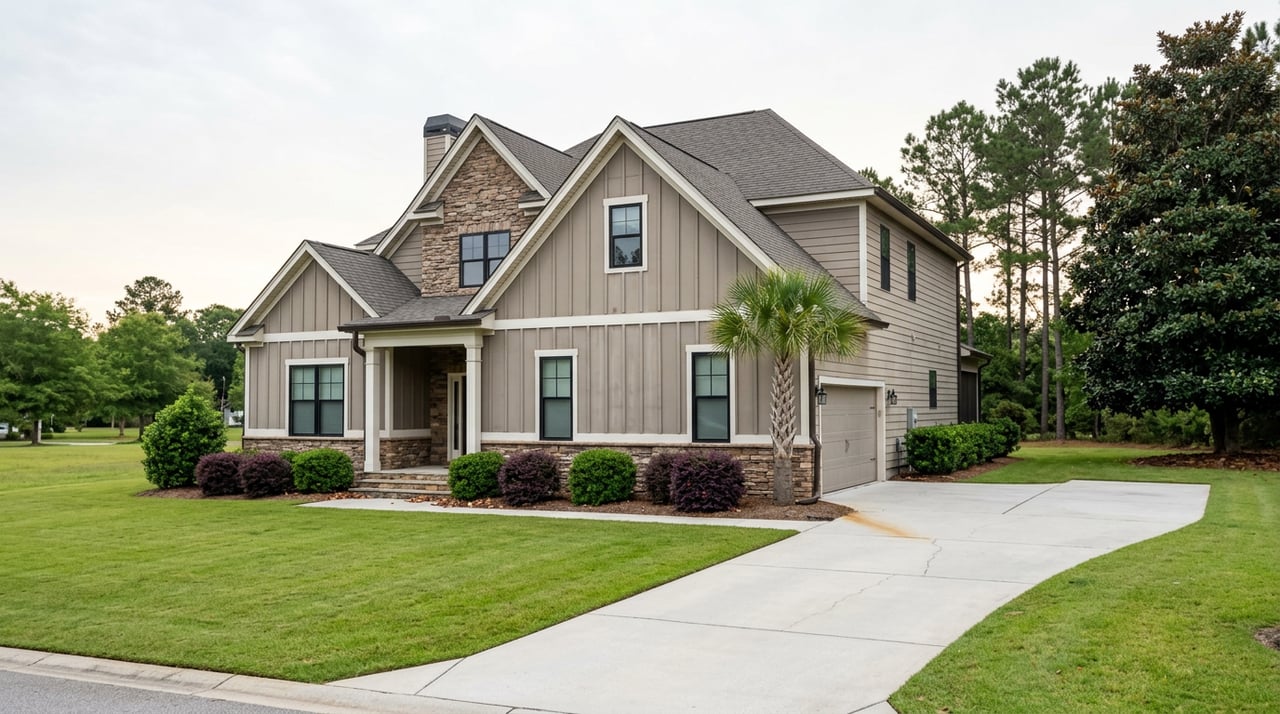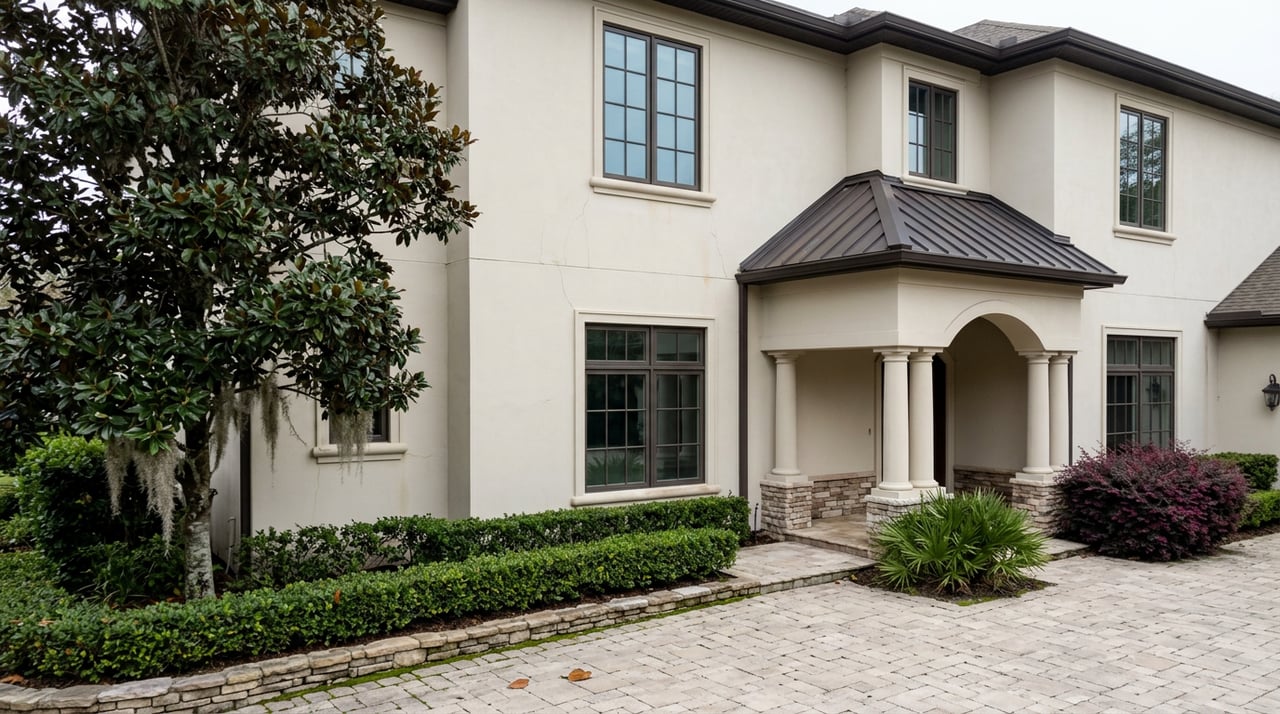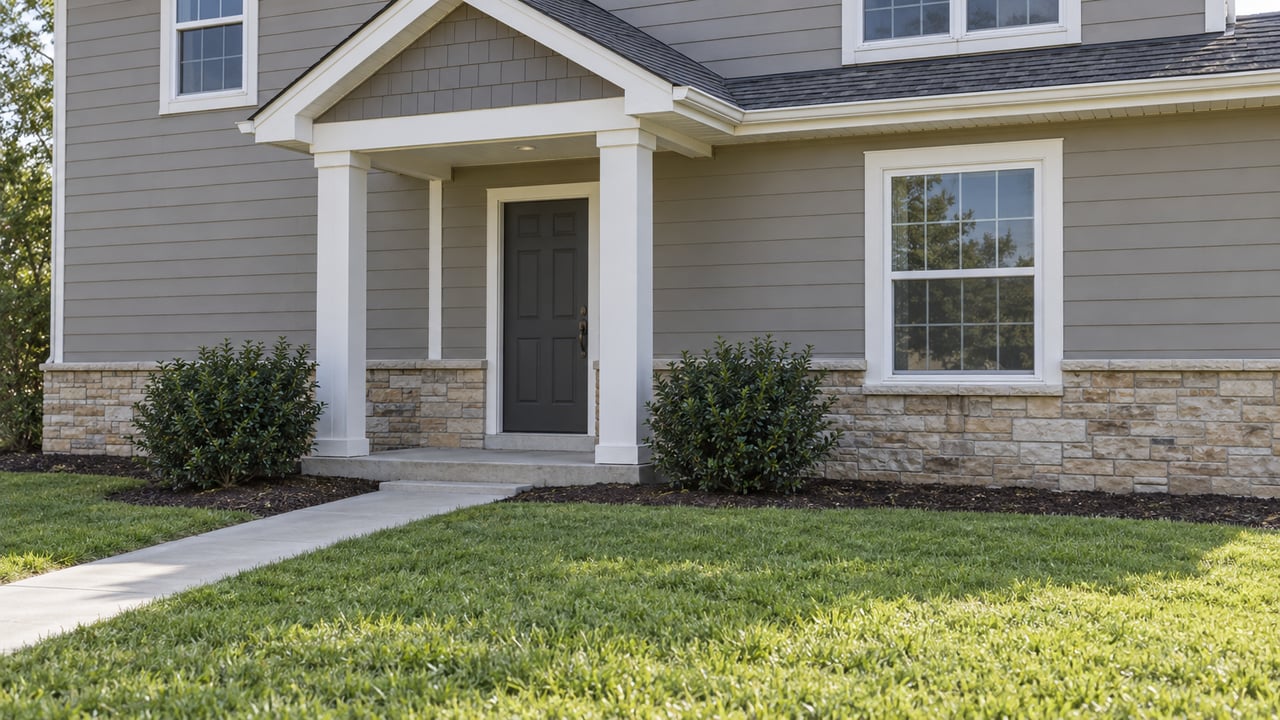
Drive out Pine Barren Road in Pooler and you'll pass the usual markers of a Chatham County growth corridor: cleared lots, silt fencing, a sales trailer or two, crews framing walls that will be someone's kitchen by next spring. One of the communities going up along this stretch looks like all the others from the road. It isn't. When construction wraps at Palmetto Cay, the 148 townhomes inside will never carry a For Sale sign, never close with a buyer's agent, and never show up as a comparable sale on anyone's appraisal.
That distinction matters more than it sounds like it should, especially if you're watching Pooler's construction numbers and treating them as a signal about how much competition you'll face as a buyer.
A Different Kind of New Construction
Most of what gets built in Pooler follows a familiar path. A builder buys land, pulls permits, constructs homes in phases, and sells each one to an individual owner who takes out a mortgage and holds the deed. That's true of the townhome and single-family product going up across Savannah Quarters, Godley Station, and Forest Lakes.
Palmetto Cay follows a different model entirely. It's a build-to-rent community, meaning the entire project, all 148 units, is owned and operated by a single company from day one. Nobody buys a unit here. Everybody leases one.
The developer, Parkland Residential, announced in January 2025 that land development had started at the site, located within the Providence at Pooler master plan and zoned to New Hampstead High School. The plan includes two-bedroom townhomes around 1,600 square feet and three-bedroom units with a loft near 1,950 square feet, arranged around a shared green with a pool, a cabana, and a playfield. It's Parkland's first project in the greater Savannah area, according to the company's own announcement, and the firm described Pooler's growth as the reason for choosing the site.
Every unit at Palmetto Cay is designed for a tenant, not a buyer. There is no path from this community to an owner-occupied closing.
Why an Institutional Builder Chose This Corner of Pooler
Build-to-rent capital doesn't chase appreciation the way an individual buyer might. It chases dependable renters, and Pooler's location gives it plenty to work with. Pine Barren Road sits inside a corridor that already mixes retail and residential growth, close to I-95 and I-16, a short drive from the airport, and within commuting range of Gulfstream Aerospace's campus. Just across the county line in Bryan County, the Hyundai Metaplant began vehicle production in late 2024, and the supplier ecosystem building up around it has been pulling workforce housing demand into the I-16 corridor that runs straight through Pooler.
None of that is a bet on home values climbing. It's a bet that people will keep needing a place to live near these jobs, whether or not they ever buy. That's a different calculation than the one a family makes when shopping for a starter home, and it's worth understanding because it explains why a company with no prior presence in Chatham County chose to enter here at scale rather than testing the market with a handful of units.
What This Changes About Reading Pooler's Growth Numbers
Here's the part that actually affects your search. When people point to Pooler's pace of new construction as evidence that supply is loosening and buyers will have more room to negotiate, that argument quietly assumes every new unit eventually becomes something a buyer can compete for. Palmetto Cay breaks that assumption. All 148 of those units will exist, will house people, will show up in permit counts and construction headlines, and will never once appear as inventory on a for-sale market or as a comp for a nearby resale.
If you're trying to gauge how much real for-sale competition you'll face in Pooler over the next year, a rental-only project of this size needs to be set aside from the count, not folded into it. It tells you something true about population growth and housing demand. It tells you nothing about how many homes will be available for you to buy.
For-Sale Master Plans Still Work the Way You'd Expect
Not every large community in Pooler works this way, and it helps to know which ones don't. Savannah Quarters, built around a Greg Norman-designed golf course, includes for-sale product from multiple builders, including Lennar and D.R. Horton's Westbrook Villas collection. Godley Station has older, established neighborhoods like Copper Village and Towne Lake where homes already trade hands on the resale market. Forest Lakes, developed by Landmark 24, is a gated enclave built the traditional way, lot by lot, buyer by buyer.
Here's a quick way to see the contrast:
Community | Developer/Builder(s) | For-sale or build-to-rent |
|---|---|---|
Savannah Quarters | Lennar, D.R. Horton (Westbrook Villas) | For-sale |
Godley Station (Copper Village, Towne Lake) | Multiple builders, established | For-sale, resale-active |
Forest Lakes / Westbrook | Landmark 24 | For-sale |
Palmetto Cay (Providence at Pooler) | Parkland Residential | Build-to-rent only |
Providence at Pooler itself is a mixed-use master plan with retail outparcels and residential phases, and Palmetto Cay is one piece inside that larger plan. That mix, some phases for sale, one phase built to rent forever, is becoming more common as institutional capital finds its way into growth corridors like this one. It means you can't assume a master plan's name tells you what kind of housing sits inside it anymore.
How to Tell Before You Tour
A few habits will save you a wasted afternoon if you're touring new construction in Pooler:
Ask directly whether the community is for-sale or for-lease before you schedule a visit. A leasing office and a sales office look similar from the parking lot but operate under completely different rules.
Check who holds title. For-sale communities record individual deeds to each buyer. Build-to-rent communities are typically held by a single ownership entity, which means there's no HOA in the traditional sense, no closing, and no mortgage for you to shop.
Notice the language in the marketing. Terms like "leasing now" or "professionally managed community" are reliable tells for build-to-rent. "Now selling" or "move-in ready homes starting from" point toward a traditional for-sale phase.
A Few Questions We Hear Often
Does a build-to-rent community affect home values in the neighborhood around it? Appraisers pull comparable sales from arm's-length transactions between buyers and sellers. A rental-only community doesn't generate those sales, so it won't directly set the comps for a nearby for-sale home. It does add renter households to the area, which can support the retail and services that make a corridor more livable, but it isn't the kind of data point that shows up in a comparative market analysis.
Will any of Palmetto Cay's units ever be sold individually? Based on how the developer has described the project, no. Build-to-rent is a business model built around long-term ownership and lease income, not a construction phase on the way to individual sales. Companies that build this way typically hold the entire community as a single asset.
Are there other build-to-rent projects planned for Pooler? Institutional interest in build-to-rent has grown across the Savannah metro in recent years, and Providence at Pooler's mix of retail, for-sale phases, and Palmetto Cay's rental-only townhomes suggests more mixed master plans could follow this pattern. Anyone comparing growth corridors should ask the same question of every large announcement: is this adding to the homes I can buy, or to the homes I'll be competing against for a lease?
If you're weighing Pooler against another corner of the Savannah metro and trying to figure out how much of the construction you're reading about will actually turn into a house you can buy, that's exactly the kind of question worth asking before you tour a single model home. Robin Lance Realty knows which Pooler communities are building toward a closing and which ones are building toward a lease, and can walk you through the difference on the ground before you spend a weekend touring the wrong kind of new construction.