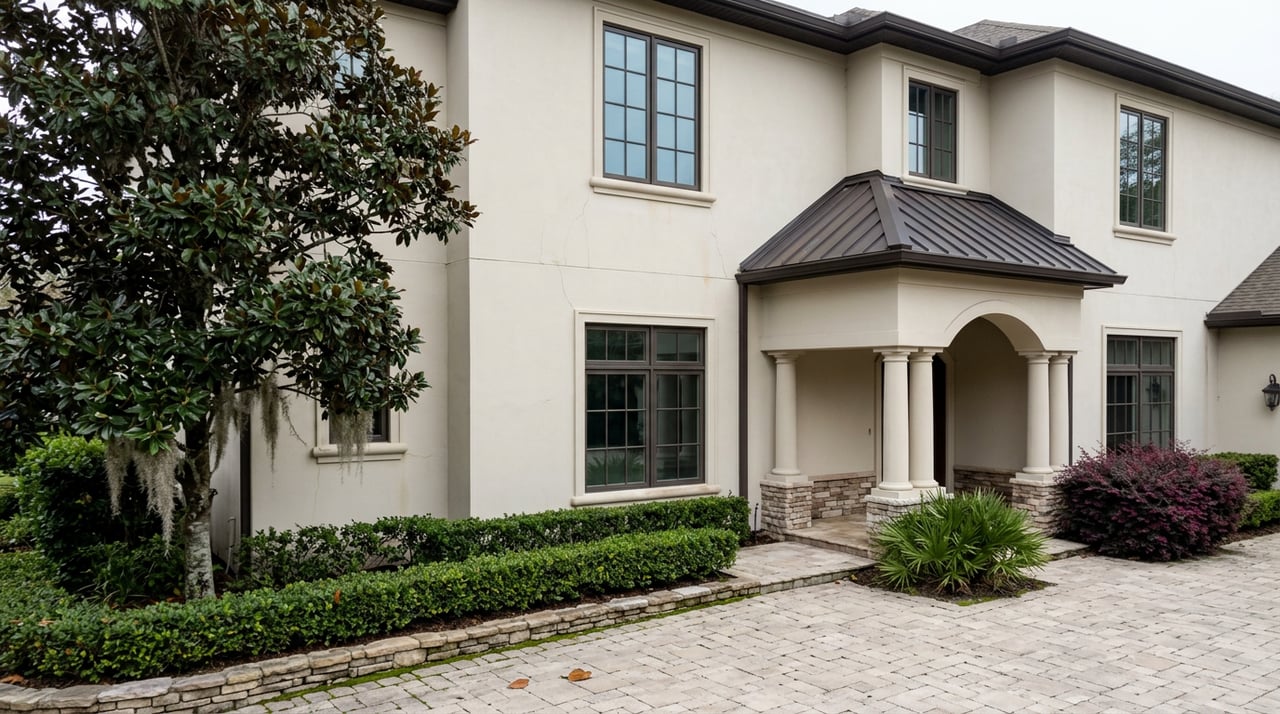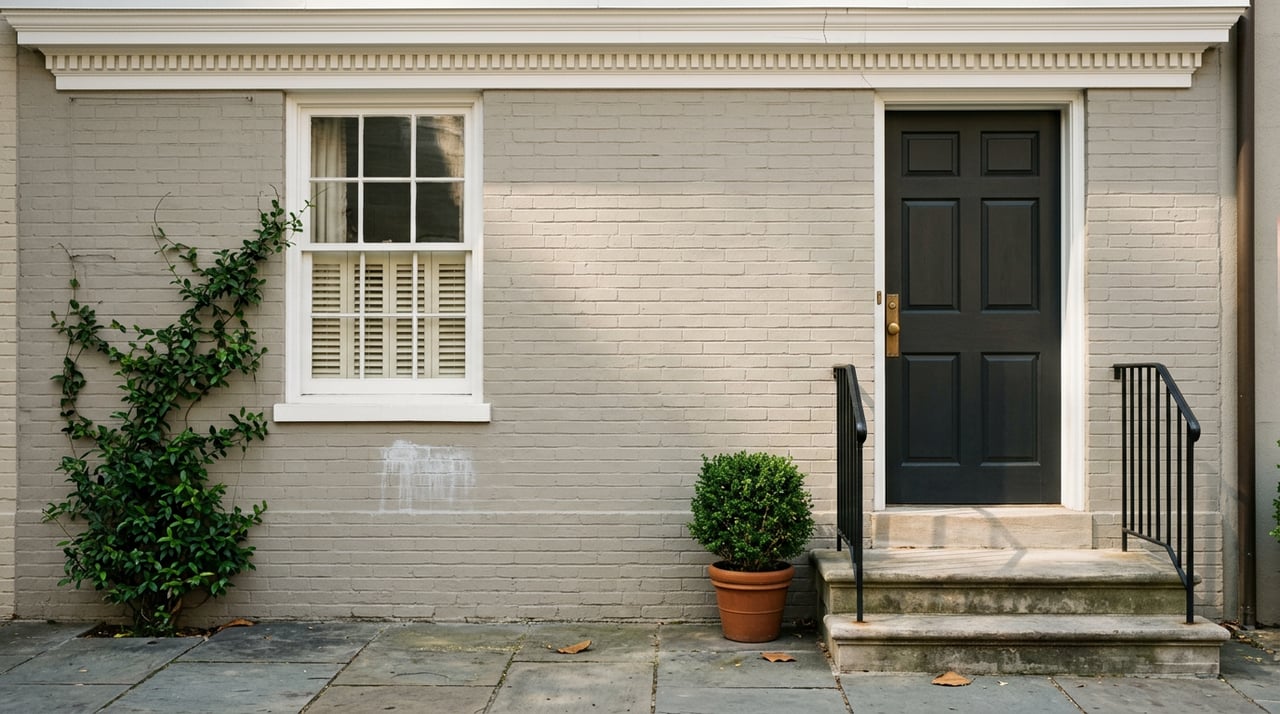
The Savannah metro spent the first half of 2026 letting the air out of the tire. Median sale prices settled between $328,000 and $340,000, days on market stretched to 70 to 82, and roughly 63% of homes closed under their original ask, according to Savannah Business Journal reporting from July 16, 2026. The Historic District did the opposite. Median values downtown pushed past $944,000, a 27% year-over-year jump.
That divergence is the story, but it is not the thesis. The thesis is narrower: in a district where buyers are willing to pay a premium, the sellers who capture that premium are the ones whose exterior-work paper trail is clean before the sign goes in the yard. Undocumented Certificates of Appropriateness are now the single largest source of last-minute price erosion in the overlay.
The paper trail buyers' attorneys pull first
Inside the Savannah Downtown Historic Overlay District, most exterior changes visible from a public right-of-way require a Certificate of Appropriateness under Section 3.19 of the City of Savannah zoning ordinance. That includes new construction, material exterior changes, additions, relocation, demolition, awnings, exterior color changes, and certain signs. Interior work, ordinary maintenance, and minor in-kind repairs are generally handled differently, though the Metropolitan Planning Commission advises confirming scope before starting.
Here is what has changed on the buyer side. In 2026, real estate attorneys representing buyers in the Landmark District routinely request the full COA history for the parcel during due diligence. If a prior owner replaced windows, repainted, added a rear deck visible from a lane, or reworked a stoop without pulling the COA, that gap surfaces. The buyer's counsel then does one of three things: asks for a repair credit sized to the estimated cost of retroactive review, asks for the seller to resolve the violation before closing, or walks.
None of those outcomes are theoretical. The Savannah Downtown Historic District Board of Review meets the second Wednesday of every month at 1 p.m. There is no expedited track for a home under contract. A file that needs board review at the point of a contested inspection can push a closing four to eight weeks.
Two review tracks, one calendar
Understanding which track a project falls on is the difference between a two-week fix and a two-month delay. The MPC organizes work into three practical tiers.
| Tier | Typical work | Timing |
|---|---|---|
| No historic approval usually needed | Ordinary maintenance, minor in-kind repairs, most work not visible from a public right-of-way | Confirm scope with MPC staff before starting |
| Staff-level review | Color changes, roof repair or replacement, awnings, stucco repair, brick repointing, shutters, many window repairs | Roughly up to ten business days after a complete application |
| Full Historic Review Board hearing | Rehabilitation, alterations, additions, new construction, signs, fences, demolition | Docketed on the next available meeting; a pre-application conference with MPC staff is required under Ordinance 3.19.4a |
Two rules inside that structure catch sellers off guard. Three or more staff-review items on a single application automatically escalate to a board review. And any application involving a non-contributing structure is an automatic board review, regardless of scope. That means a homeowner who tries to bundle several small fixes into one application to save time can, in effect, elect themselves onto the HRB agenda.
Caveat emptor doesn't mean caveat vendor
Georgia is a buyer-beware state. Sellers are not required by statute to complete a standardized disclosure form, and Georgia courts continue to follow the caveat emptor doctrine as reaffirmed in Atlanta Partners Realty, LLC v. Wohlgemuth, 365 Ga. App. 386 (2022). That is where the misreading starts.
The doctrine has a well-established exception. A seller who has special knowledge of a defect not apparent to the buyer, and who knows the buyer is acting without that knowledge, owes a duty to disclose. In the Historic District, "defect" reads broadly. A prior addition built without a COA is not a construction defect, but it is a regulatory encumbrance that a reasonable buyer would want to know about before signing. Silence on a known unpermitted alteration is the kind of fact pattern that turns into a post-closing fraud claim.
The Georgia Association of Realtors tightened this in 2026. The F302 Latent Defect Disclosure now carries an explicit "Georgia is a Buyer Beware state" warning, the flooding and water-intrusion section was rewritten from scratch, and propane and fuel-tank ownership questions were added. The federal Lead-Based Paint Disclosure remains mandatory for any home built before 1978, which describes most of the district's inventory. An "as-is" addendum limits the seller's obligation to make repairs. It does not extinguish the duty to disclose what the seller knows.
A clean file is not a legal formality in the Historic District. It is the document a buyer's attorney reads before deciding how hard to push on price.
Why the district's pricing power rewards preparation
In a balanced metro, buyer concessions have returned to the negotiation. The Annie-Mac hometown data published in late May 2026 flagged the resurgence of seller-paid closing costs at 2% to 3%, live repair requests, and seller-funded 2-1 rate buydowns. That is the environment across most of Chatham County.
Inside the overlay, the picture is different. A median near $944,000 in mid-2026, against a metro median around a third of that, reflects inventory scarcity and steady demand for a specific product: a maintained, character-intact home on a Ward lot. What erodes that premium is not the sticker debate. It is the second round, after inspection and title review, when the buyer's team catalogs everything the seller cannot explain. Retroactive COA work, an unresolved violation, a preservation easement no one flagged in the listing packet — each item becomes a line in a credit request. In a market where buyers already expect concessions elsewhere, sellers here are absorbing them for reasons that could have been resolved before listing.
A pre-listing sequence that actually holds up
The work is unglamorous and it is the point.
- Pull the parcel's COA history from the MPC preservation department at 912-651-1440. Confirm every exterior alteration in the last two decades was reviewed. Where it was not, request guidance on retroactive review.
- Confirm contributing status. A contributing structure is treated differently from a non-contributing one, and buyers' counsel will ask.
- Check for unresolved historic-review violations and any recorded preservation easement or deed restriction. Easements can exist independently of city review and follow the property.
- Engage a home inspector experienced with older Savannah housing stock. Plaster, knob-and-tube remnants, single-pane sash windows, original heart-pine flooring, masonry parging, and hidden moisture behind stucco all reward judgment over checklist.
- Complete the GAR F301 and F302 candidly. The 2026 flood and water-intrusion questions are the ones sellers most often under-answer. Historical answers matter more than current-condition answers.
- If a building permit was ever pulled without a companion COA, call the City's Development Services Department at 912-651-6530 and reconcile the record before listing.
Sellers who work through that list before pricing the home almost never see a credit request larger than a typical inspection response. Sellers who skip it discover, at day 45, that the buyer's team has priced every gap for them.
FAQ
Do I need a COA to paint my house before selling? Exterior color changes visible from a public right-of-way generally require a COA in the Downtown Historic Overlay District. Color changes are typically handled at staff level rather than board review, but confirm with MPC before starting.
My addition is 30 years old and there is no COA on file. What now? Talk to MPC preservation staff before the listing goes live. Age of the work does not extinguish the record gap, but staff can often advise on documentation that satisfies a buyer's counsel without a full retroactive review.
Does an "as-is" listing solve my disclosure risk? No. An as-is addendum under the GAR contract limits your obligation to make repairs. It does not limit your duty to disclose known latent material defects, including known unpermitted work.
Will Section 106 review affect my sale? Only if the buyer plans to use certain HUD-funded assistance programs on a home 50 years or older. In the Historic District that condition is common, and the City's Programmatic Agreement governs how Section 106 review is streamlined.
Selling inside the overlay is a document exercise as much as a marketing exercise. If you are weighing a listing in the Landmark District or anywhere across the city, Robin Lance Realty will walk your file before it walks in front of a buyer's attorney. Get your home value and a pre-listing paper-trail review from a team that has closed Savannah transactions for decades.